medicine
Exosomes & Regenerative Science
Advancing Athletic Recovery Through Cellular Communication
Sports medicine is evolving beyond symptom management — toward therapies that support the body’s natural ability to repair, recover, and perform. At the leading edge of this evolution is regenerative science, a field focused on enhancing the body’s own biological processes to accelerate healing and optimize musculoskeletal health.
One of the most promising developments in this space is exosome-based regenerative technology.
WHAT ARE EXOSOMES?
In sports medicine, this cellular communication is critical for recovery from:
- Muscle strains and tears
- Tendon and ligament injuries
- Joint stress and cartilage wear
- Overuse and inflammatory conditions
Rather than becoming new tissue themselves, exosomes deliver regenerative signals that help guide how injured or stressed cells respond, repair, and adapt.
Because of this, exosomes are increasingly being explored as a next-generation biologic platform in regenerative medicine.
WHY EXOSOMES ARE DIFFERENT?
Exosomes offer several potential advantages over traditional biologics and cell-based therapies:
Natural & Cell-Free
Exosomes are not live cells. This means they do not divide or engraft, but instead deliver biologically active signals in a highly targeted way.
Multi-Pathway Signaling
Each exosome carries a complex cargo that can influence multiple repair and immune pathways at once — supporting more coordinated healing responses.
Immunomodulatory Properties
Exosomes have demonstrated the ability to help regulate inflammation and immune signaling, which is critical for recovery and tissue repair.
Scalable Biomanufacturing
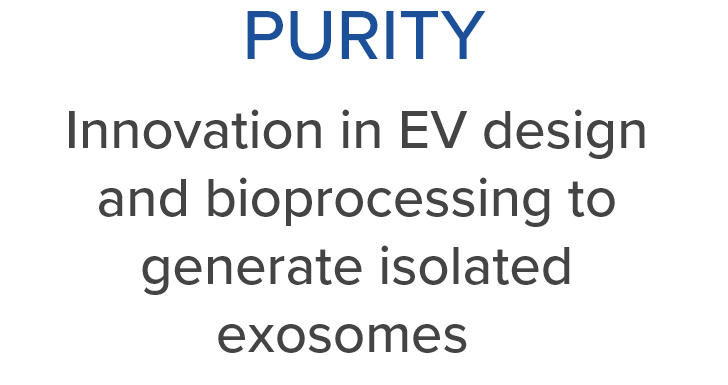
Advanced bioprocessing allows for controlled production, isolation, and quality analysis of exosome-based products for clinical research and therapeutic development
REGENERATIVE MEDICINE IN SPORTS & PERFORMANCE CARE
Traditional sports medicine often focuses on pain relief and symptom control. Regenerative sports medicine aims to go deeper — supporting biological repair at the cellular level.
Regenerative approaches in athletic care may support:
- Soft tissue healing and remodeling
- Joint health and cartilage support
- Inflammation modulation
- Faster recovery between training sessions
- Improved tissue resilience and durability
Exosome-based science is being explored as a way to influence multiple healing pathways at once, offering a more comprehensive biologic approach to athletic recovery..
APPLICATIONS IN SPORTS MEDICINE & ORTHOPEDICS
Exosome science is being actively explored across a range of sports medicine and performance-related areas, including:
- Tendon and ligament recovery
- Joint health and cartilage support
- Muscle recovery and repair
- Overuse and repetitive stress injuries
- Post-injury and post-surgical rehabilitation
- Performance and training recovery optimization
Research continues to expand understanding of how exosomes influence cellular uptake, tissue signaling, and recovery pathways, forming the foundation for next-generation regenerative sports therapies.
APPROACH TO REGENERATIVE SPORTS CARE
Exosome science is being actively explored across a range of sports medicine and performance-related areas, including:
- Tendon and ligament recovery
- Joint health and cartilage support
- Muscle recovery and repair
- Overuse and repetitive stress injuries
- Post-injury and post-surgical rehabilitation
- Performance and training recovery optimization
Research continues to expand understanding of how exosomes influence cellular uptake, tissue signaling, and recovery pathways, forming the foundation for next-generation regenerative sports therapies
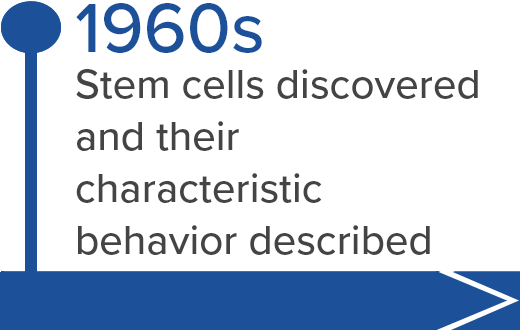
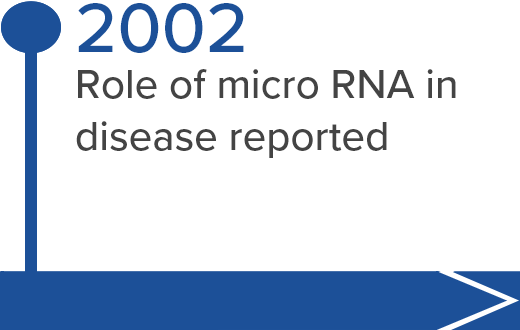
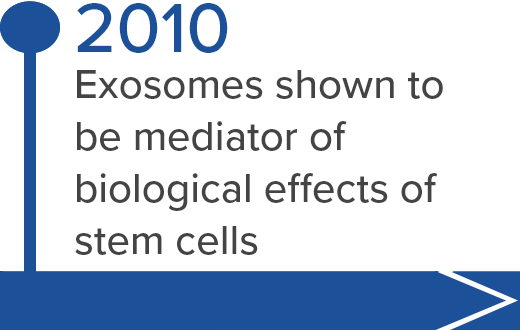
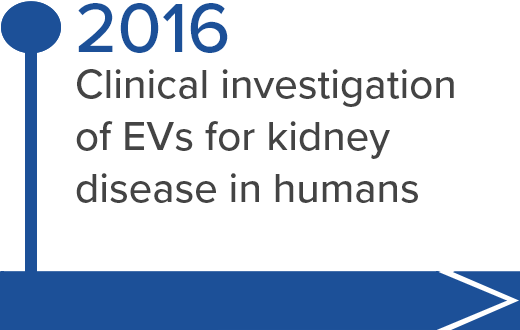
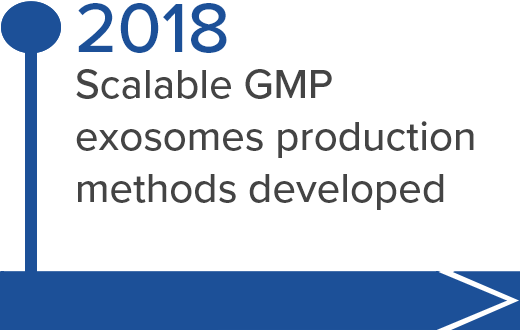
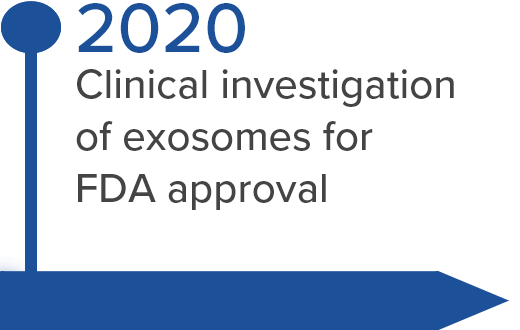
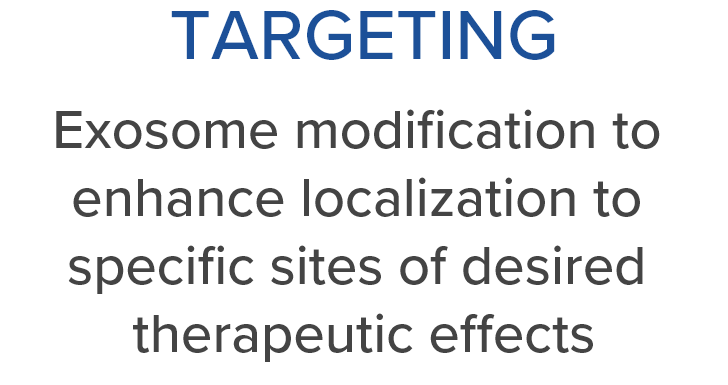
Pathway to Clinical Development of Exosomes
Regenerative Medicine: A New Therapeutic Paradigm
Traditional medicine often focuses on managing symptoms. Regenerative medicine aims to address healing at a deeper biological level by supporting the body’s innate ability to repair and restore itself.
Regenerative approaches may be used to support:
- Musculoskeletal health
- Inflammatory and degenerative conditions
- Soft tissue and joint recovery
- Cellular aging and tissue resilience
Immune system balance and modulation
Exosome-based technologies are being studied for their ability to target multiple signaling pathways simultaneously, offering a broader and more biologically aligned approach compared to conventional pharmaceuticals.
LONGEVITY
Early Diagnosis and Prevention
Detection of pathologic states before the presentation of symptoms, and therapeutic intervention that prevents the development of disease or injury into disability or death are the keys to longevity. Understanding the molecular mechanisms of disease will enable the development of EVs containing specific biological cargo for disease prevention and will eventually provide a way to slow, stop or reverse the manifestations of aging. Employing or enhancing the intrinsic biological properties of some types of exosomes, such as those produced by stem cells, could be used to disrupt the pathogenesis of disease, which may involve chronic inflammation,
autoimmunity, tissue degeneration, abnormal metabolic pathways and more. Knowing that molecular mechanisms such as oxidative stress and inflammation are responsible for the changes associated with aging, and that specific EVs have biologic properties that may negate these effects, it may be possible to use EVs to prevent the decline in cell function that causes tissue degeneration, organ failure and ultimately death. If cellular function can be restored with optimized EVs, it could be possible to slow or stop tissue degeneration, slow the manifestations of aging, and live a longer healthier life.